The Future of Cryptocurrency in 2026: Key Trends, Risks, and Opportunities
Introduction
The cryptocurrency industry in 2026 is no longer driven purely by hype. It has evolved into a structured financial ecosystem supported by institutional investors, regulatory frameworks, and real-world applications. As blockchain technology matures, crypto is transitioning from speculative trading to infrastructure-level adoption.
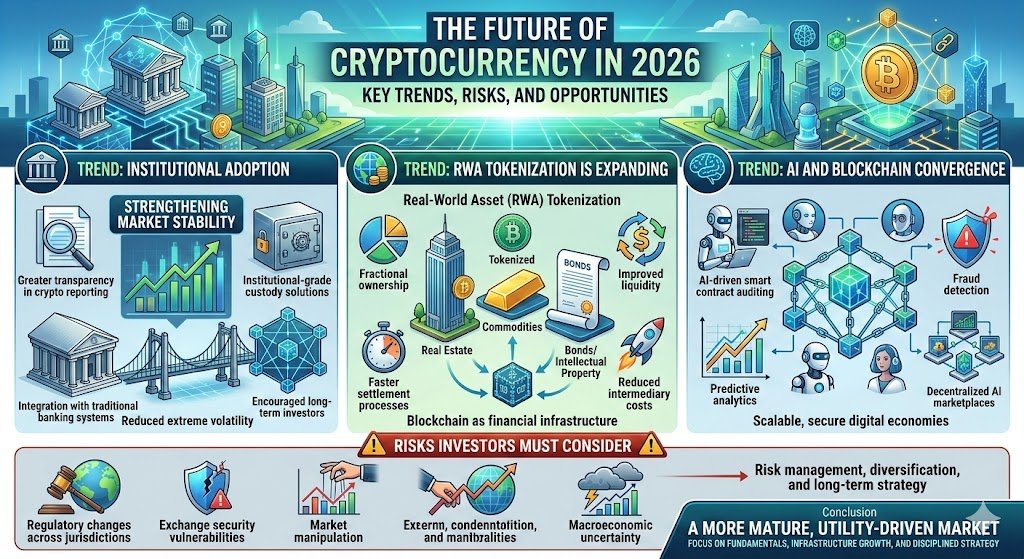
Institutional Adoption Is Strengthening Market Stability
Over the past few years, financial institutions have increasingly embraced digital assets. Bitcoin ETFs, regulated exchanges, and crypto custody services have improved trust in the market.
- Greater transparency in crypto reporting
- Institutional-grade custody solutions
- Integration with traditional banking systems
This shift has reduced extreme volatility compared to earlier cycles and encouraged long-term investors to participate.
Real-World Asset (RWA) Tokenization Is Expanding
One of the most important trends in 2026 is the tokenization of real-world assets. Real estate, commodities, bonds, and even intellectual property are being represented on blockchain networks.
- Fractional ownership
- Improved liquidity
- Faster settlement processes
- Reduced intermediary costs
This development positions blockchain as financial infrastructure rather than just a trading tool.
AI and Blockchain Convergence
Artificial intelligence and blockchain integration is reshaping decentralized ecosystems. AI-driven smart contract auditing, fraud detection, predictive analytics, and decentralized AI marketplaces are emerging rapidly.
The synergy between automation and decentralization is creating scalable, secure digital economies.
Risks Investors Must Consider
- Regulatory changes across jurisdictions
- Exchange security vulnerabilities
- Market manipulation
- Macroeconomic uncertainty
Risk management, diversification, and long-term strategy are essential.
Conclusion
Cryptocurrency in 2026 represents a more mature, utility-driven market. Investors who focus on fundamentals, infrastructure growth, and disciplined strategy are better positioned for sustainable gains.